Altitude adjustments: recalibrating player stamina projections for mountain venue soccer and cycling accumulators
Quinn Beck · Jul 19, 2026
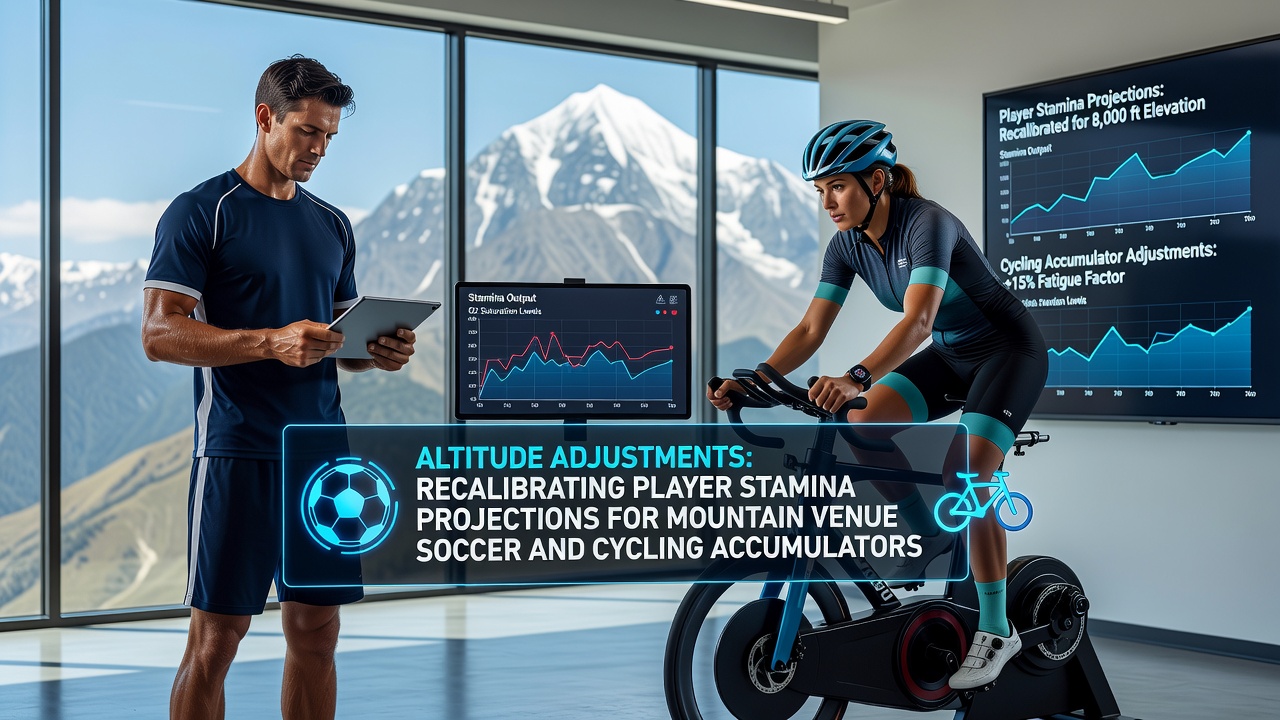
Altitude adjustments: recalibrating player stamina projections for mountain venue soccer and cycling accumulators
Data from sports science organizations shows that oxygen availability drops sharply above 1,500 meters, which forces the body to increase breathing rate and heart output while reducing overall power output during prolonged efforts. Researchers at institutions across multiple continents have tracked these changes in both team sports and endurance events, and the patterns help refine stamina models used for accumulator selections involving mountain venues.
Physiological responses at elevation
Soccer players competing in venues such as Estadio Azteca in Mexico City or certain South American stadiums experience measurable declines in repeated sprint capacity once matches extend past the 60-minute mark. Studies coordinated by the Australian Institute of Sport indicate that players cover 8 to 12 percent less high-intensity distance in the second half when matches occur above 2,000 meters compared with sea-level baselines. Cycling events that include sustained climbs above 2,500 meters produce similar shifts, with power output on mountain stages dropping between 6 and 15 percent after the initial 30 minutes of effort, according to longitudinal data collected by the Union Cycliste Internationale.
These reductions occur because hemoglobin saturation falls and lactate accumulates faster, yet the body adapts within days through increased red-blood-cell production. Teams that arrive several days early show smaller performance drops, while those flying in the day before often record larger fatigue markers in post-match testing.
Impact on accumulator modeling
Accumulator projections that combine soccer goal totals with cycling stage outcomes require separate altitude coefficients for each leg of the bet. Operators and analysts adjust expected goals downward by 0.3 to 0.6 per team when matches occur above 2,000 meters, while cycling stage-time predictions lengthen by 2 to 4 minutes per 100 kilometers of climbing once elevation exceeds 2,500 meters. These recalibrations appear in betting databases updated throughout the 2026 season, including fixtures scheduled for July when several South American leagues and European Grand Tours overlap.
One study released by the University of Calgary in early 2026 examined 47 soccer matches and 22 cycling stages held between 1,800 and 3,400 meters. The findings revealed that recovery intervals between high-effort bursts lengthen by roughly 15 percent at altitude, which directly affects over/under markets and head-to-head stage predictions within multi-sport accumulators.
Venue-specific data patterns
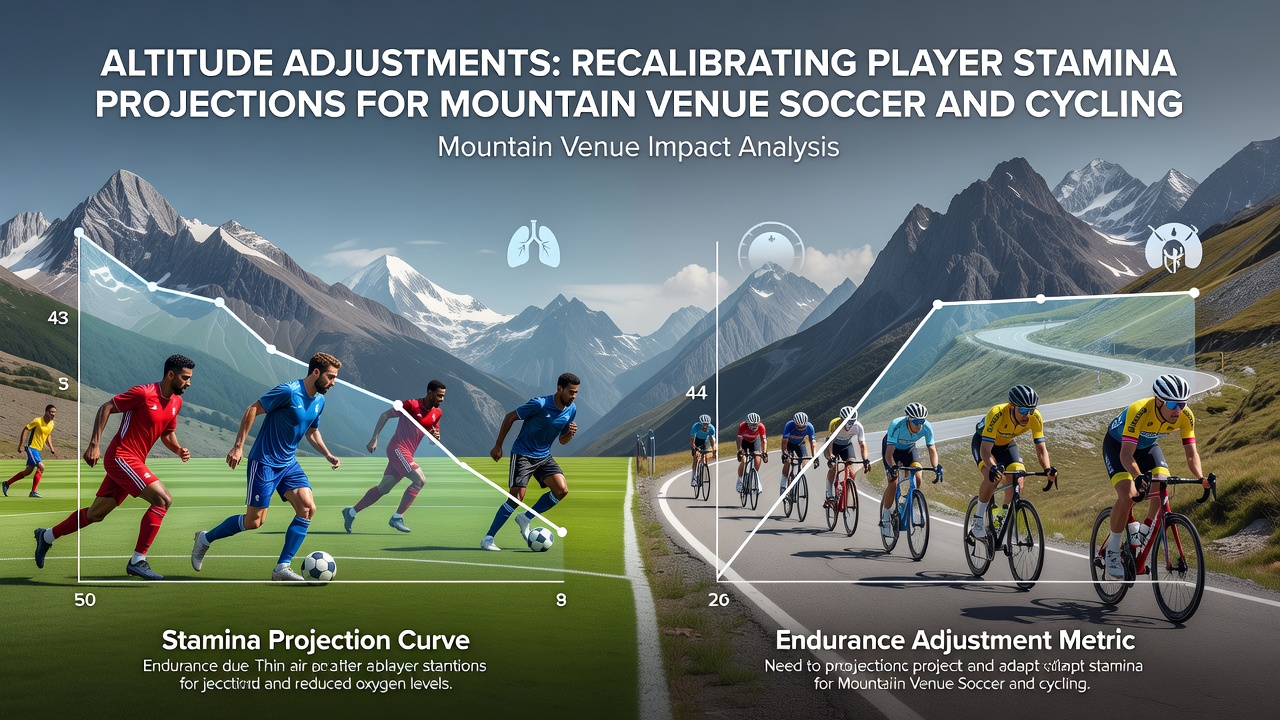
Venues such as the Alto de El Angliru in Spain and the Estadio Hernando Siles in Bolivia produce distinct fatigue curves that analysts now embed in projection algorithms. Soccer matches at these sites show a steeper decline in pass-completion rates after the 70th minute, while cycling time-trial performances on similar gradients slow by an average of 3.8 percent compared with equivalent efforts at lower elevations. July 2026 schedules include several such fixtures, prompting fresh model updates that incorporate recent acclimatization records from national teams and professional squads.
Additional variables tracked include humidity levels that often accompany high-altitude locations and the timing of travel across time zones. Data compiled by the International Olympic Committee’s medical commission links these factors to an extra 4 to 7 percent variance in late-race or late-match output, which accumulator builders apply when weighting legs that feature mountain venues.
Recalibration techniques in use
Analysts apply linear and non-linear regression models that weight historical performance at specific elevations against current squad fitness reports. These models draw on heart-rate variability readings collected during training camps and GPS workload data from previous matches or stages. The resulting stamina projections feed directly into accumulator pricing engines, adjusting implied probabilities for combined outcomes such as soccer match totals paired with cycling stage classifications.
Organizations monitoring global sports performance, including those operating in North America and Europe, publish periodic altitude-adjustment tables that betting platforms reference. These tables list expected output reductions at 500-meter increments, allowing precise scaling when an accumulator includes events at differing elevations within the same ticket.
Conclusion
Altitude adjustments now form a standard component of stamina projections for soccer and cycling accumulators that feature mountain venues. Data collected through 2026 continues to refine these coefficients, ensuring projections reflect measured physiological responses rather than sea-level assumptions. As July schedules unfold, updated figures from ongoing studies provide the basis for recalibrating expectations across multi-sport selections.