Altitude Effects on Performance: Mapping Elevation Changes to Competitive Outcomes in Mountain-Based Events and Cross-Sport Parallels
Riley Richter · Aug 26, 2026
Altitude Effects on Performance: Mapping Elevation Changes to Competitive Outcomes in Mountain-Based Events and Cross-Sport Parallels
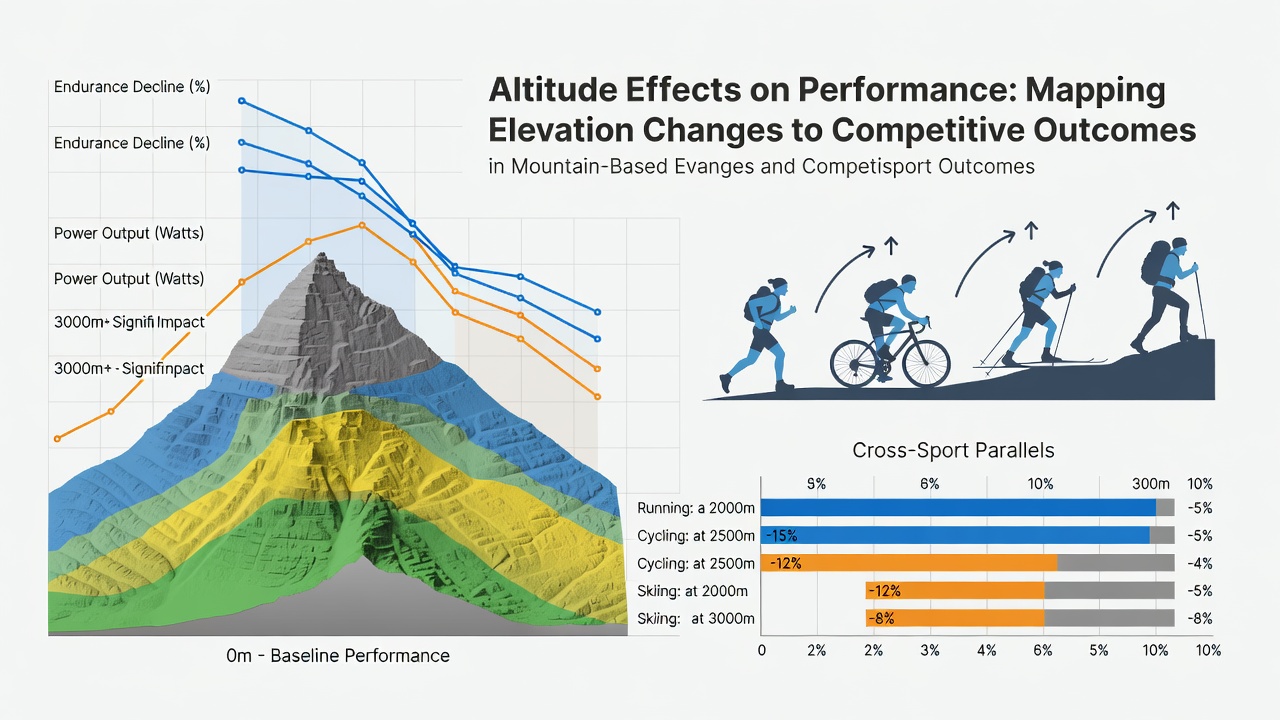
Competitors in mountain-based events face measurable shifts in oxygen availability as elevation rises, and researchers have documented how these changes alter endurance capacity, power output, and recovery rates across disciplines. Data from events held at elevations above 2000 meters show consistent patterns where athletes experience reduced aerobic performance, with VO2 max declining roughly 10 percent for every 1000 meters gained, according to studies compiled by the International Olympic Committee. Mountain races in cycling, trail running, and skiing provide clear case studies because course profiles allow direct mapping of elevation gains to split times and overall results.
Physiological Responses at Elevation
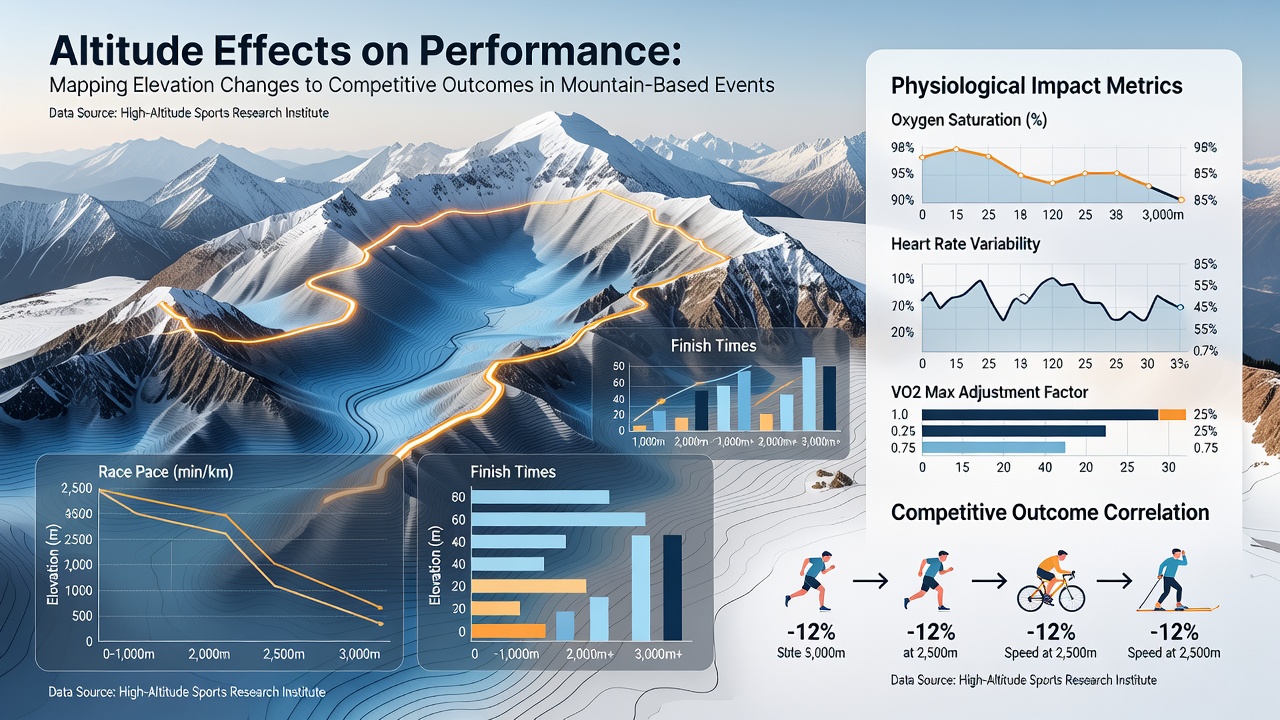
Lower partial pressure of oxygen triggers immediate adjustments in breathing rate and heart output, while longer exposure leads to increased red blood cell production that partially offsets the deficit. Observers note that unacclimatized athletes often see heart rates climb 10 to 15 beats per minute higher than sea-level baselines during the same workload, and blood lactate thresholds shift upward in the first 48 hours. Studies conducted at laboratories in the United States and Switzerland indicate that these responses stabilize after 10 to 14 days for most individuals, although full hematological adaptation can require three weeks or more. Events scheduled in August 2026, including several European mountain stages, have prompted teams to incorporate staged altitude camps that mirror the exact elevation bands competitors will encounter.
Performance Data from Mountain Cycling and Running
Stage races such as the Tour de France and Vuelta a España feature multiple summit finishes above 2000 meters, and timing data reveal that time gaps between top contenders widen by an average of 20 to 30 seconds per kilometer compared with flat stages. Trail running records set at altitude, including those from the Leadville 100 and similar North American events, show finishing times extended by 8 to 12 percent relative to comparable sea-level courses of equal distance. Researchers tracking heart rate and power meter files across thousands of rides have isolated elevation as the dominant variable once gradient and wind are controlled, with cross-checks against GPS-derived elevation profiles confirming the relationship.
Cross-Sport Parallels in Team Events
Football matches played at high altitude, such as those in La Paz at 3600 meters, produce similar decrements in total distance covered and sprint frequency, according to match analysis published by FIFA-affiliated performance labs. Basketball teams traveling to venues above 1500 meters report measurable drops in shooting accuracy and defensive recovery speed during the first half, with figures from NCAA and professional scouting databases indicating a 5 to 7 percent reduction in effective field goal percentage before acclimatization occurs. These patterns parallel endurance findings because both intermittent and continuous efforts rely on oxygen delivery systems that become stressed at elevation, although the magnitude differs by sport-specific energy demands.
Acclimatization Strategies and Event Scheduling
National federations and professional squads now coordinate arrival times and training blocks based on elevation profiles published in advance by race organizers, with many opting for live-high train-low protocols that keep athletes near competition altitude overnight while conducting key sessions at lower elevations. Data collected during the 2025 season and projected forward for August 2026 events indicate that athletes who arrive 14 days early reduce their performance deficit by approximately half compared with those who fly in the day before. Governing bodies including the Union Cycliste Internationale and World Athletics have begun requiring medical declarations for events above 2500 meters to monitor hydration and oxygen saturation levels during competition.
Measurement Tools and Predictive Modeling
Wearable devices that combine pulse oximetry with power and GPS data allow coaches to quantify individual responses rather than relying on generalized tables, and regression models built from aggregated race files now predict time losses at specific elevation points with margins of error under 3 percent. Universities in Canada and Australia have contributed open datasets that include both laboratory chamber studies and field measurements from actual competitions, enabling federations to refine selection criteria for mountain specialists. These models also highlight outliers, such as athletes with exceptional hypoxic ventilatory responses who maintain higher outputs than predicted at altitude.
Conclusion
Elevation changes produce predictable shifts in competitive outcomes across mountain-based sports, and the same physiological mechanisms extend to team events when venues sit at comparable heights. Mapping these effects through timing data, physiological monitoring, and acclimatization protocols gives organizers and athletes concrete tools for preparation, while ongoing research continues to refine predictive accuracy for future events.