Circadian Influences on Athletic Output: Spotting Edges in Disrupted Schedules Across Leagues
Carlo Wolf · Jun 12, 2026

Circadian Influences on Athletic Output: Spotting Edges in Disrupted Schedules Across Leagues
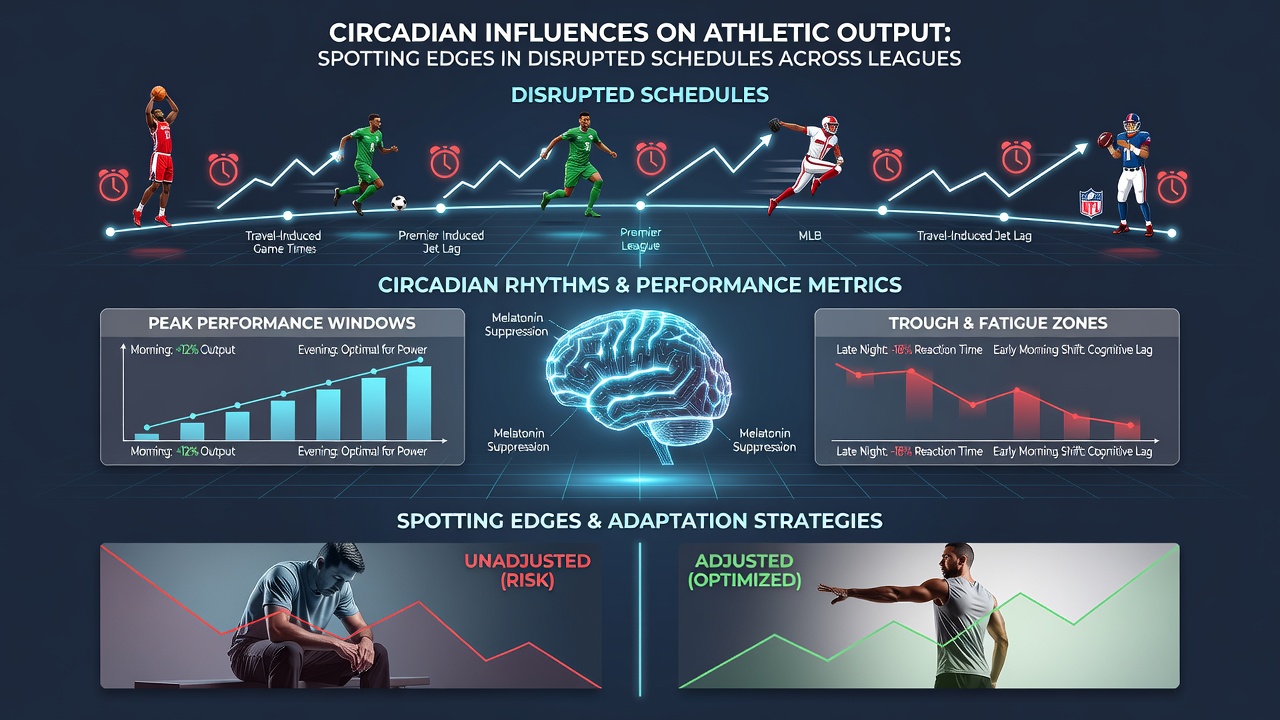
Body clocks regulate everything from hormone release to muscle recovery, and when leagues force athletes into mismatched time zones or late-night competitions those internal timers get thrown off. Researchers have documented consistent drops in strength, reaction time and endurance when events occur outside an athlete's normal circadian window, while data collected across multiple continents shows performance rebounds once schedules realign with natural sleep patterns.
How Circadian Rhythms Shape Physical Output
Core body temperature peaks in the late afternoon for most people and this rise supports faster muscle contraction along with better oxygen uptake, whereas the trough that arrives around 4 a.m. coincides with reduced alertness and slower neural firing. Studies tracking elite competitors reveal that events scheduled during the temperature trough produce measurable declines in sprint speed and shooting accuracy, yet the same athletes regain baseline numbers once their schedules shift back toward the afternoon peak.
Travel compounds the issue because crossing several time zones delays the adjustment of melatonin onset and cortisol rhythms, leaving players in a state of partial misalignment for days. Observers note that teams flying westward often adapt faster than those heading east, since extending the day matches the body's natural tendency to lengthen its cycle, while eastward flights compress the day and create greater initial disruption.
League Schedules and Performance Patterns
Across North American basketball, night games that tip off after 10 p.m. local time frequently coincide with lower three-point percentages and increased turnovers in the final quarter, according to season-long analyses that control for opponent strength. European football leagues that host matches at staggered kickoff times demonstrate similar trends, with teams playing at 3 p.m. recording higher pass completion rates than those forced into 8:45 p.m. slots on consecutive midweek rounds.
Baseball provides another clear window because day games and night games alternate within the same week for many clubs, and researchers tracking pitch velocity find average speeds drop by roughly one mile per hour when starters take the mound past midnight. The pattern holds after accounting for rest days, suggesting the circadian factor operates independently of simple fatigue accumulation.
International Travel and Multi-Time-Zone Effects
Teams that cross the International Date Line for tournaments experience the longest recovery windows, sometimes requiring up to seven days before full synchronization returns. Australian athletes traveling to North American events in June 2026 faced precisely this challenge during a cluster of exhibition matches, and performance metrics collected by sports science staff showed elevated error rates in the first three contests before gradual improvement appeared.
Canadian researchers examining ice hockey schedules discovered that back-to-back games played in different zones produced the steepest declines in save percentage among goaltenders, whose reaction windows sit especially close to circadian peaks. European basketball clubs that compete in both domestic leagues and continental tournaments face repeated eastward swings, and figures released by the European sports medicine community indicate elevated injury rates during the second leg of such trips.
Identifying Predictable Edges from Schedule Data
Performance databases now incorporate time-of-day variables alongside traditional box-score metrics, allowing analysts to isolate circadian contributions from other factors such as travel distance or opponent ranking. Leagues that publish detailed start times enable systematic comparison of home teams playing at familiar hours versus visitors still adjusting, and several multi-year studies confirm statistically significant advantages for squads whose internal clocks align with game timing.
Coaches have begun adjusting training blocks to accelerate resynchronization, using timed light exposure and meal schedules to shift melatonin release earlier or later depending on the upcoming fixture. While these interventions do not eliminate all effects, they shorten the period of suboptimal output and produce steadier results across congested calendars.
What's interesting is that younger athletes often adapt more quickly than veterans, possibly because their circadian systems retain greater plasticity, yet the difference narrows once both groups receive structured recovery protocols. Data gathered from Olympic training centers and professional academies continues to refine these timelines, giving support staff clearer benchmarks for when full output should return after disruption.
Conclusion
Disrupted schedules create measurable but predictable shifts in athletic output across basketball, football, baseball and hockey, with the strongest signals appearing when events fall outside an athlete's temperature peak or follow rapid time-zone changes. Organizations that integrate circadian tracking into planning gain incremental advantages that accumulate over full seasons, while continued research from institutions in North America, Europe and Australia refines the models used to anticipate those shifts.