Elevation Levels and Their Influence on Outcomes Across Athletic Competitions
Riley Richter · Aug 26, 2026
Elevation Levels and Their Influence on Outcomes Across Athletic Competitions
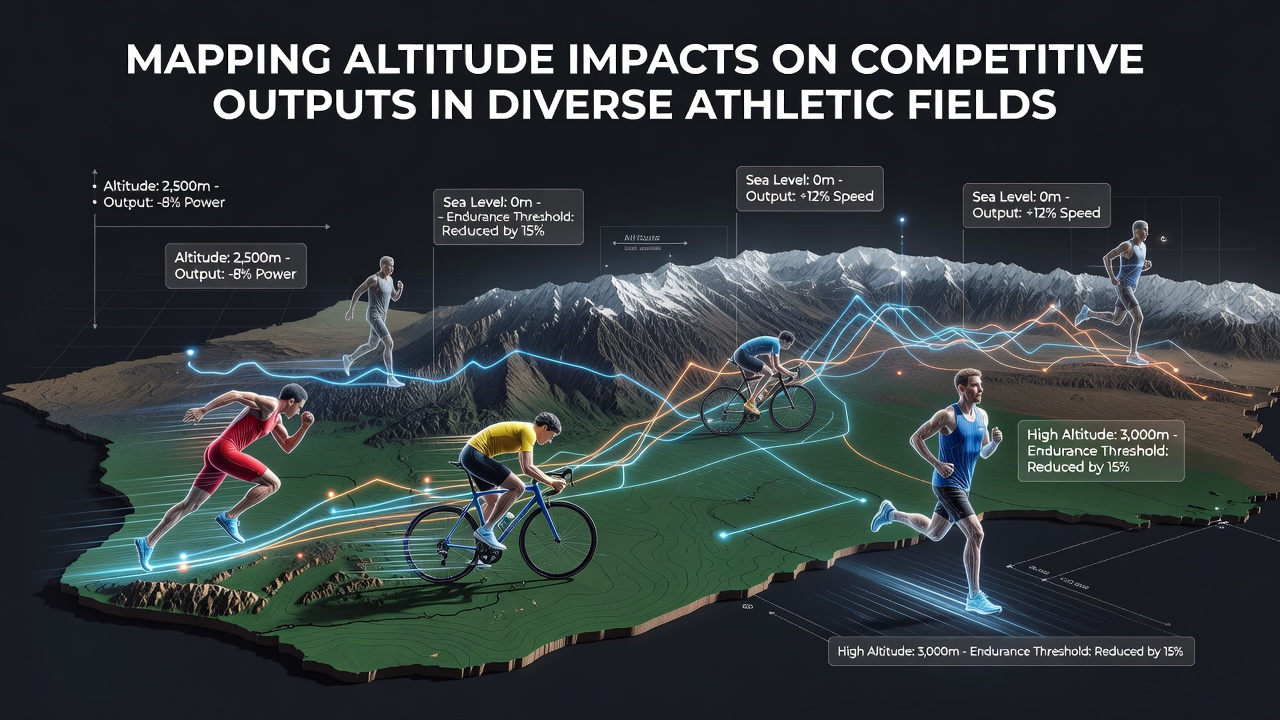
Researchers have documented how elevation changes oxygen availability and affects muscle efficiency during sustained efforts, while data from multiple international competitions show measurable shifts in sprint times, endurance distances, and recovery intervals when athletes move between sea level and sites above 1,500 meters. Studies compiled by sports physiology labs indicate that hemoglobin concentrations rise within days of arrival at higher sites, yet power output in explosive movements often declines until full acclimatization occurs over two to three weeks.
Physiological Mechanisms at Play
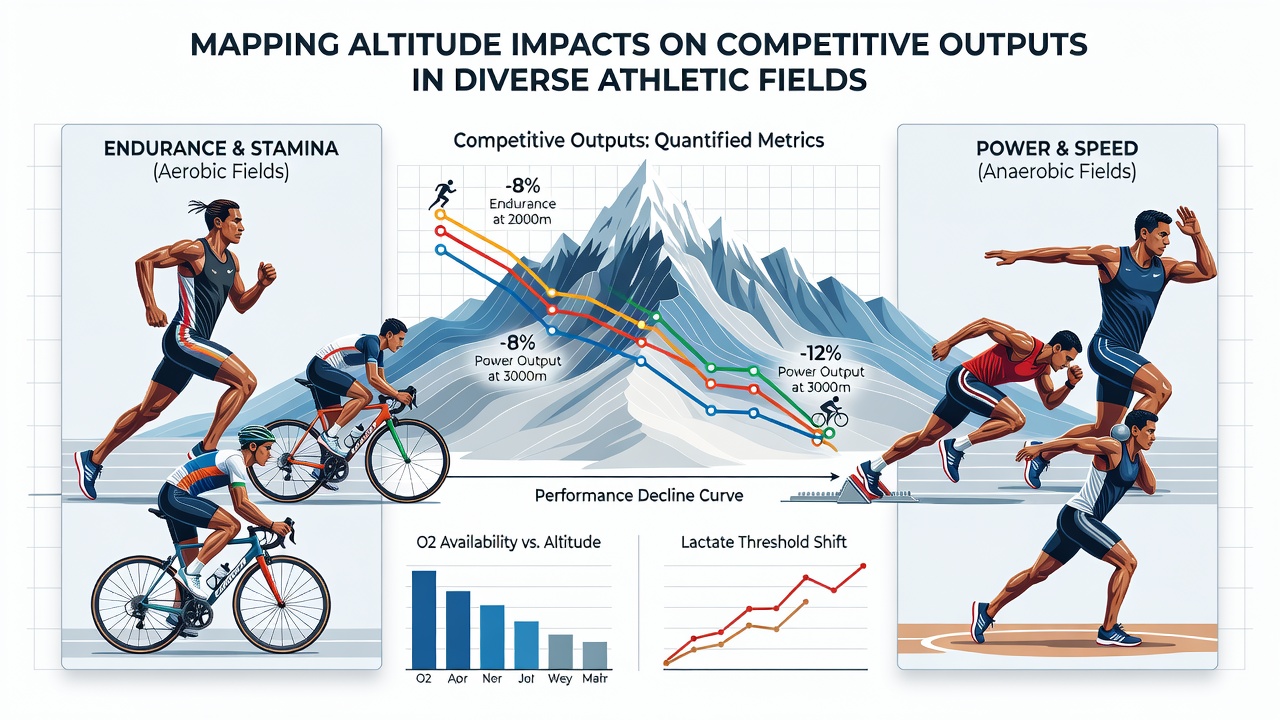
Lower air pressure reduces the partial pressure of oxygen, so the body compensates by increasing breathing rate and heart output during the first 48 hours, yet maximal aerobic capacity drops by roughly 7 to 10 percent for every 1,000 meters gained according to measurements taken at training camps in the Andes and the Rockies. Anaerobic activities such as short sprints experience smaller immediate effects because they rely less on oxygen delivery, but the reduced air density can allow slightly faster top speeds in track events when wind resistance falls.
Performance Patterns in Team Sports
Soccer matches played at venues like those in Johannesburg during the 2010 World Cup and later tournaments in Quito recorded fewer total kilometers covered by players in the second half, while passing accuracy remained stable yet goal-scoring rates shifted toward teams that arrived earlier for adaptation. Basketball data from high-elevation arenas in Utah and Colorado reveal that three-point shooting percentages hold steady, but overall possession times shorten because fatigue accumulates faster in transition plays. Volleyball sets at similar altitudes show serve speeds increasing slightly due to thinner air, although rally lengths contract because defensive movements slow after prolonged exchanges.
Track and Field Observations
Elite distance runners have posted personal bests at moderate elevations after structured altitude blocks, yet same-day competition results at 2,500 meters often show 3 to 5 percent slower times in events longer than 5,000 meters compared with sea-level marks. Sprinters meanwhile record marginal improvements in 100-meter and 200-meter dashes at those same sites because reduced drag outweighs the modest oxygen deficit during efforts lasting under 30 seconds. Field event athletes in jumps and throws experience mixed outcomes, with horizontal jumps gaining from lower air resistance while throws suffer when the implement encounters less lift.
Recent Data Collection Efforts
Monitoring programs launched in early 2026 across European and North American training centers have logged heart-rate variability and blood oxygen saturation for athletes preparing for August competitions, and preliminary figures released in July indicate that teams spending 18 to 21 days at 2,000 meters before descending achieve closer to baseline outputs within 24 hours of return. One ongoing project coordinated by Canadian sport institutes tracks swimmers training at altitude and reports that stroke efficiency improves modestly after the initial week while overall race times in 400-meter events remain within 1 percent of sea-level equivalents once athletes readjust.
Regional Variations and Event Scheduling
Competitions scheduled for August 2026 in South American and African venues above 1,800 meters will test adaptation protocols developed after earlier multi-sport gatherings, and governing bodies now require medical screening for cardiac strain markers before clearance. Observers note that athletes from low-lying regions who incorporate intermittent hypoxic training during the preceding months maintain higher average speeds in the latter stages of matches and races. European federations have begun sharing standardized altitude acclimatization guidelines that recommend staged ascents rather than direct travel to event sites.
Equipment and Environmental Interactions
Ball trajectories in soccer and tennis deviate more noticeably above 2,000 meters because Magnus force changes with air density, prompting some coaches to adjust passing angles and spin rates during preparation camps. Racket sports played indoors at elevation show smaller effects since climate control mitigates temperature and humidity swings, whereas outdoor events combine altitude with wind patterns that further alter flight paths. Researchers continue to map these interactions through sensor-equipped equipment deployed at test events held in 2025 and 2026.
Conclusion
Comprehensive mapping of altitude effects now relies on integrated datasets from physiology labs, competition organizers, and national training centers across multiple continents, and the resulting models help coaches time arrivals and adjust workloads for optimal outputs. Continued refinement of these frameworks supports consistent performance planning as the calendar moves into late 2026 and beyond.