Equine Gait Metrics Shaping Human Athletic Frameworks Through Biomechanical Alignment
Carlo Wolf · Oct 30, 2026
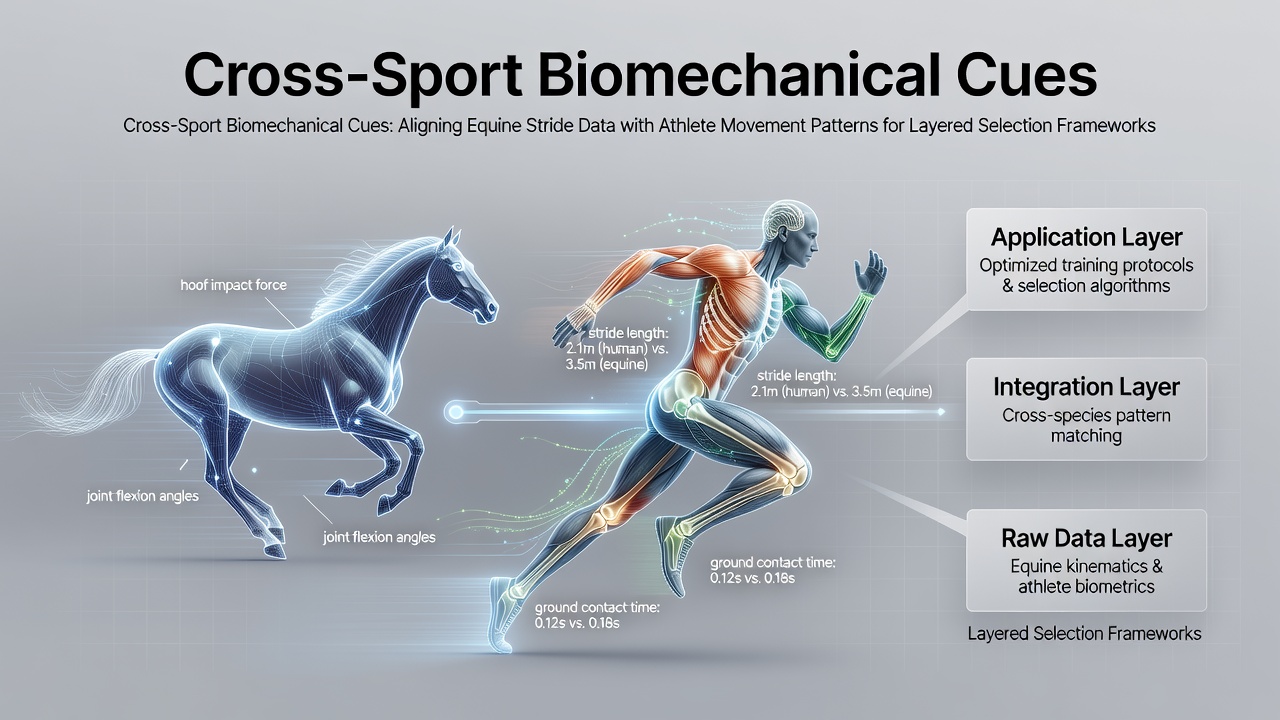
Equine Gait Metrics Shaping Human Athletic Frameworks Through Biomechanical Alignment
Researchers in sports science have begun examining how equine stride data aligns with human athlete movement patterns to build layered selection frameworks across disciplines, and this integration draws on precise measurements of gait cycles, force distribution, and kinematic variables that appear in both horses and humans during locomotion. Studies from October 2026 highlight conferences where these cross-species comparisons gained traction as teams collected synchronized data sets from racehorses and track athletes to identify shared biomechanical markers for performance prediction models.
Core Elements of Equine Stride Analysis
Equine biomechanics relies on sensors and high-speed cameras that record stride length, frequency, stance time, and swing phase duration, while data shows that thoroughbreds typically achieve stride lengths exceeding 7 meters at peak speeds, and researchers note these metrics correlate with muscle activation sequences that observers have mapped in similar patterns among elite sprinters. Equipment manufacturers supply inertial measurement units placed along the horse's limbs and torso, and these devices generate time-series outputs that feed into algorithms designed to detect asymmetries or fatigue indicators before they manifest as reduced velocity.
Layered selection frameworks incorporate multiple data tiers starting with raw kinematic capture, moving through statistical normalization against breed-specific or sport-specific baselines, and ending with predictive scoring that ranks individuals for targeted training interventions, and this structure allows analysts to layer equine-derived thresholds onto human datasets where joint angle ranges and ground reaction forces overlap in measurable ways.
Transferring Patterns to Human Athletic Contexts
Athlete movement patterns in sports such as running, jumping, and cycling share fundamental principles with equine locomotion because both systems depend on elastic energy storage in tendons and efficient energy transfer through the kinetic chain, yet human applications require adjustments for bipedal posture and variable surface interactions that differ from quadrupedal dynamics. Research teams at institutions including the Australian Institute of Sport have published comparisons indicating that peak propulsive forces normalized to body mass follow comparable scaling laws across species when velocity remains constant, and these findings support the creation of hybrid models that use equine stride templates to forecast human performance under fatigue conditions.
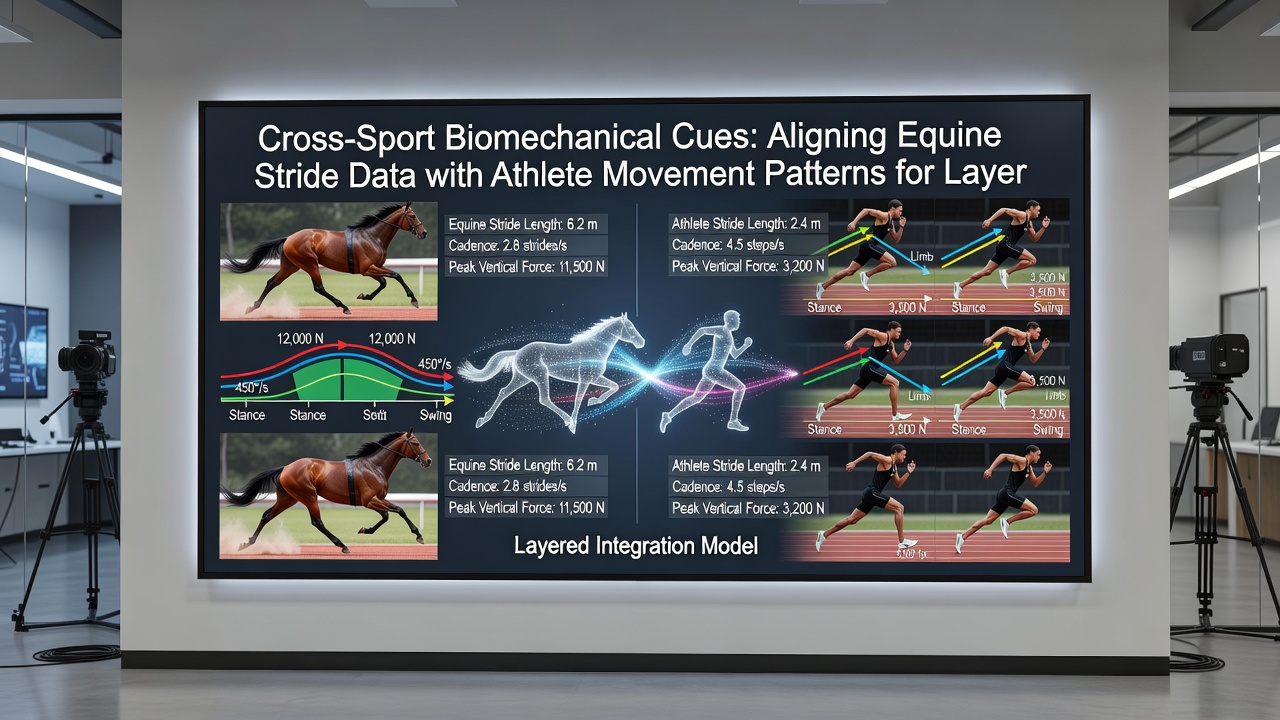
Observers note that layered frameworks gain resolution when practitioners segment data into phases such as acceleration, maintenance, and deceleration, and each phase receives weighting based on sport demands, while equine examples from flat racing demonstrate how early stride adjustments predict late-race outcomes, patterns that parallel late-game shifts observed in basketball or soccer endurance metrics. Data collected in controlled environments reveals that asymmetry indices above 5 percent in horses often precede performance drops, and similar thresholds applied to human runners have flagged injury risks in longitudinal cohort studies.
Implementation in Layered Selection Systems
Selection frameworks operate by stacking biomechanical layers onto traditional scouting metrics, and the first layer typically contains raw sensor outputs processed through machine learning classifiers trained on both equine and human corpora, whereas subsequent layers add contextual filters for age, training history, and environmental variables. European research consortia have tested these systems in pilot programs involving dressage horses and gymnasts, demonstrating improved identification rates for individuals whose movement signatures match high-performing archetypes identified in the combined datasets.
October 2026 updates from international biomechanics symposia included reports on open-source toolkits that standardize cross-sport data formats, and these resources enable smaller organizations to implement layered models without proprietary hardware, while regulatory bodies in Canada and Australia have begun exploring guidelines for ethical data sharing across equestrian and human sports federations to accelerate framework adoption.
Challenges and Measurement Considerations
Variability in surface compliance affects stride parameters differently in horses versus humans, and researchers account for this by applying correction factors derived from force plate experiments conducted on standardized tracks and courts, yet residual noise from individual anatomical differences requires ongoing calibration of selection algorithms. Data volume poses another constraint because high-frequency sampling generates terabytes per session, prompting teams to develop edge-computing solutions that filter signals in real time before storage.
Cross-validation between species demands careful matching of movement planes and joint degrees of freedom, and studies indicate that successful alignments occur most reliably in sagittal plane metrics such as hip and knee flexion angles during stance, whereas frontal plane data shows greater divergence due to equine limb structure. Practitioners continue refining these alignments through iterative testing that incorporates feedback from field performance records.
Conclusion
Cross-sport biomechanical cue integration continues to evolve as equine stride datasets inform human athlete analysis within layered selection frameworks, and evidence from multiple research programs demonstrates measurable overlaps in gait dynamics that support predictive modeling across disciplines. Continued refinement of sensor technologies and data processing pipelines will likely expand the scope of these alignments, while geographic diversity in regulatory approaches from regions outside the UK helps shape responsible implementation standards for future applications.