Recovery Windows and Their Impact on Accumulator Building in Tennis, Football, and Flat Racing
Morgan Griffin · Aug 7, 2026
Recovery Windows and Their Impact on Accumulator Building in Tennis, Football, and Flat Racing
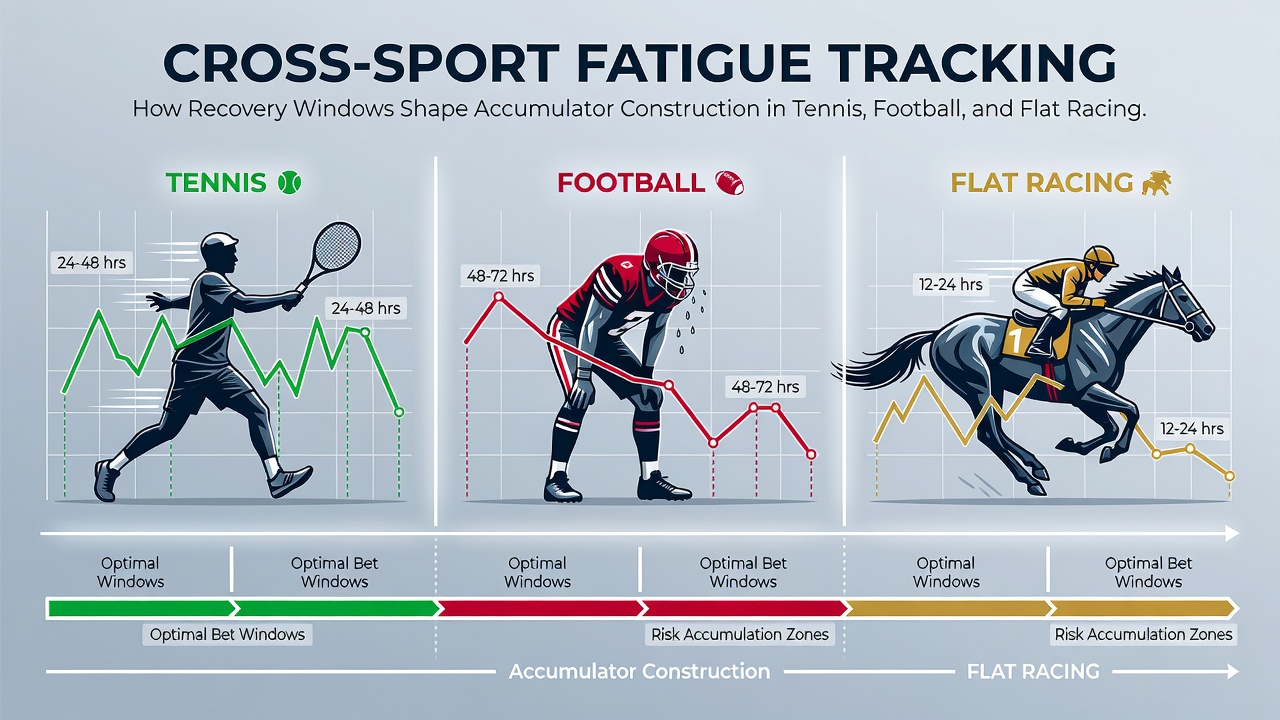
Recovery timelines play a central role in shaping how accumulators are constructed across tennis, association football, and flat racing because each sport imposes distinct physical demands that alter performance patterns in measurable ways. Data from multiple seasons shows that athletes and equine athletes exhibit predictable declines in key metrics when rest periods fall below sport-specific thresholds, which in turn influences the reliability of multi-leg bets that combine outcomes from these disciplines.
Tennis Match Density and Recovery Patterns
Professional tennis schedules create compressed recovery windows especially during the North American hard-court swing that peaks in August, and players who compete in best-of-three sets one day often face another match within 24 hours at events like the Canadian Open or Cincinnati Masters. Studies tracking serve speed, first-serve percentage, and unforced error rates indicate measurable drops after consecutive days of play without adequate rest, while those who receive 48-hour gaps maintain baseline output more consistently. Accumulator constructors therefore examine draw structures and prior-round workloads before linking tennis legs to football or racing selections, since a player advancing through three matches in five days carries different risk profiles than one entering fresh.
Football Fixture Congestion Effects
Association football calendars produce fixture congestion through overlapping domestic leagues, cup competitions, and international windows, and data compiled by the Union of European Football Associations reveals that teams playing three matches in eight days show elevated injury rates and reduced high-intensity running output in the third fixture. Midfielders and full-backs typically display the largest decrements in distance covered and sprint frequency when recovery drops below 72 hours, which affects both goal-scoring potential and defensive solidity. Those constructing accumulators often cross-reference recent match logs with travel distances to identify squads operating under compressed schedules before adding football results to tennis or racing legs.
Flat Racing Recovery and Equine Workload
Thoroughbreds in flat racing follow recovery protocols governed by veterinary guidelines and trainer records, with most horses requiring a minimum of 14 days between starts to restore muscle glycogen and tendon elasticity, although some campaigns compress this interval during major meeting clusters. Performance databases maintained by racing authorities show that horses racing inside 10 days experience statistically higher rates of finishing-position regression compared with those granted longer breaks, particularly on turf surfaces where ground conditions add further stress. Accumulator builders incorporate these intervals when selecting racing legs because recent-start patterns directly correlate with win probabilities and place outcomes that feed into multi-sport combinations.
Cross-Sport Linkages in Accumulator Construction
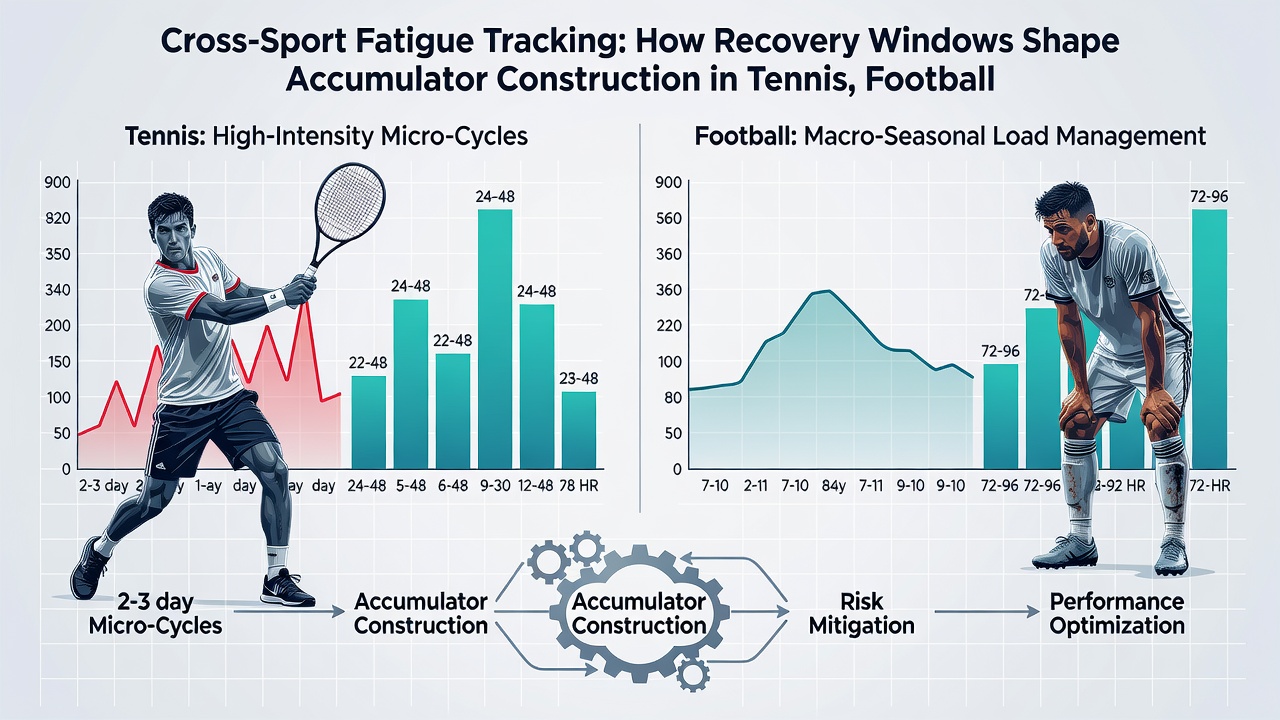
Because tennis, football, and flat racing operate on different calendars, constructors who combine selections from all three must align recovery data across disciplines to avoid loading accumulators with correlated fatigue risks. A tennis player recovering from a five-set match, a football side returning from a midweek European fixture, and a horse entered off a short turnaround can each introduce independent variance, yet simultaneous inclusion without adjustment raises the chance of multiple legs failing together. Research published in the Journal of Sports Sciences demonstrates that systematic tracking of rest intervals improves the calibration of probability estimates when legs from different sports are chained.
Data Sources and Monitoring Tools
Performance tracking systems now integrate GPS data from football, wearable sensors from tennis, and post-race veterinary reports from flat racing into unified dashboards that flag elevated fatigue markers before events begin. Observers note that these tools allow earlier identification of athletes or horses operating below optimal recovery thresholds, which in turn refines the selection criteria used for accumulator legs. Figures released by the Australian Sports Commission in 2025 highlight how multi-sport fatigue models reduced variance in combined betting portfolios when applied across summer schedules that include both tennis majors and southern hemisphere racing carnivals.
August 2026 Scheduling Considerations
The August 2026 calendar places the US Open tennis qualifying and main draw alongside the opening weeks of several European football leagues and prominent flat racing festivals, creating overlapping recovery demands for participants across all three sports. Constructors reviewing historical data from similar periods observe that legs drawn from the second week of a tennis major or from football teams with congested early-season fixtures require additional scrutiny before inclusion in multi-sport accumulators. Equine athletes entered at major summer meetings also show workload spikes that align with these windows, prompting adjustments in stake sizing and leg selection.
Conclusion
Recovery windows function as measurable inputs that directly shape accumulator construction across tennis, football, and flat racing by altering the probability distributions attached to individual legs. Systematic incorporation of rest-interval data, travel logs, and performance decrements allows constructors to calibrate combinations more precisely, while monitoring tools continue to supply granular information that links workload patterns to outcomes. As schedules remain dense through periods such as August 2026, the integration of cross-sport fatigue tracking remains a core component of building accumulators that account for the physical realities of each discipline.