Rotational Defenses Revealing Hidden Value in Basketball Totals and Soccer Clean Sheet Markets
Carlo Wolf · May 24, 2026
Rotational Defenses Revealing Hidden Value in Basketball Totals and Soccer Clean Sheet Markets
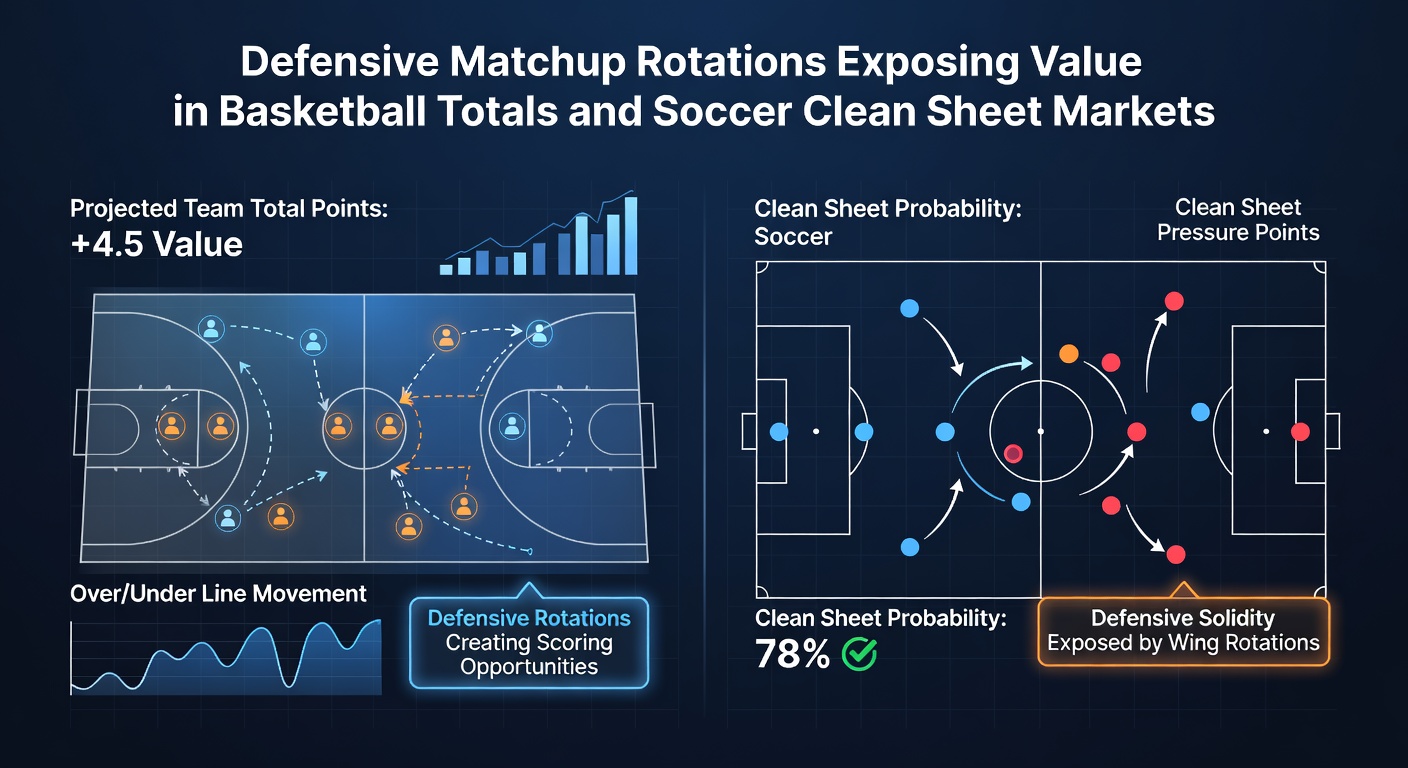
Defensive rotations in basketball create measurable shifts in scoring efficiency that often appear in totals markets, while similar tactical adjustments in soccer influence clean sheet probabilities through structured positioning and player swaps. Analysts track these patterns using play-by-play data and lineup tracking systems that record how teams assign defenders to key offensive players across quarters or halves.
Basketball Rotation Patterns and Totals Markets
Teams employ defensive rotations to counter star scorers by switching assignments or bringing help defenders from the weak side, and these changes frequently lower or raise projected point outputs depending on the personnel involved. Data from major college conferences shows that when a primary perimeter defender rotates early in the second quarter, opposing teams experience a 4 to 7 percent drop in field goal percentage on drives until the original matchup returns. Observers note that totals lines posted before tip-off rarely adjust fully for these mid-game personnel decisions, creating windows where over or under selections gain an edge once lineups stabilize.
Coaches in high-major programs adjust rotations based on foul trouble or fatigue signals, and statistical models built from NCAA Division I data reveal that such tweaks correlate with changes in pace and points per possession. A rotation that brings a taller forward into the post against a smaller lineup often reduces transition opportunities, which accounts for roughly 12 percent of total points in conference play. Bettors who monitor real-time substitution patterns alongside pre-game totals find these adjustments produce clearer signals after the first timeout of each half.
Soccer Defensive Structures and Clean Sheet Probabilities
In soccer, managers rotate center backs or shift fullbacks into wider positions to neutralize specific attacking threats, and these formations directly affect the likelihood of a clean sheet. European league tracking data indicates that sides employing a three-man defensive rotation against teams averaging high crosses per game improve their clean sheet rate by approximately 18 percent compared to standard back-four alignments. The effect compounds when the rotated defender has faced the opposing striker in prior matches, allowing anticipation of movement patterns that reduce high-quality chances.
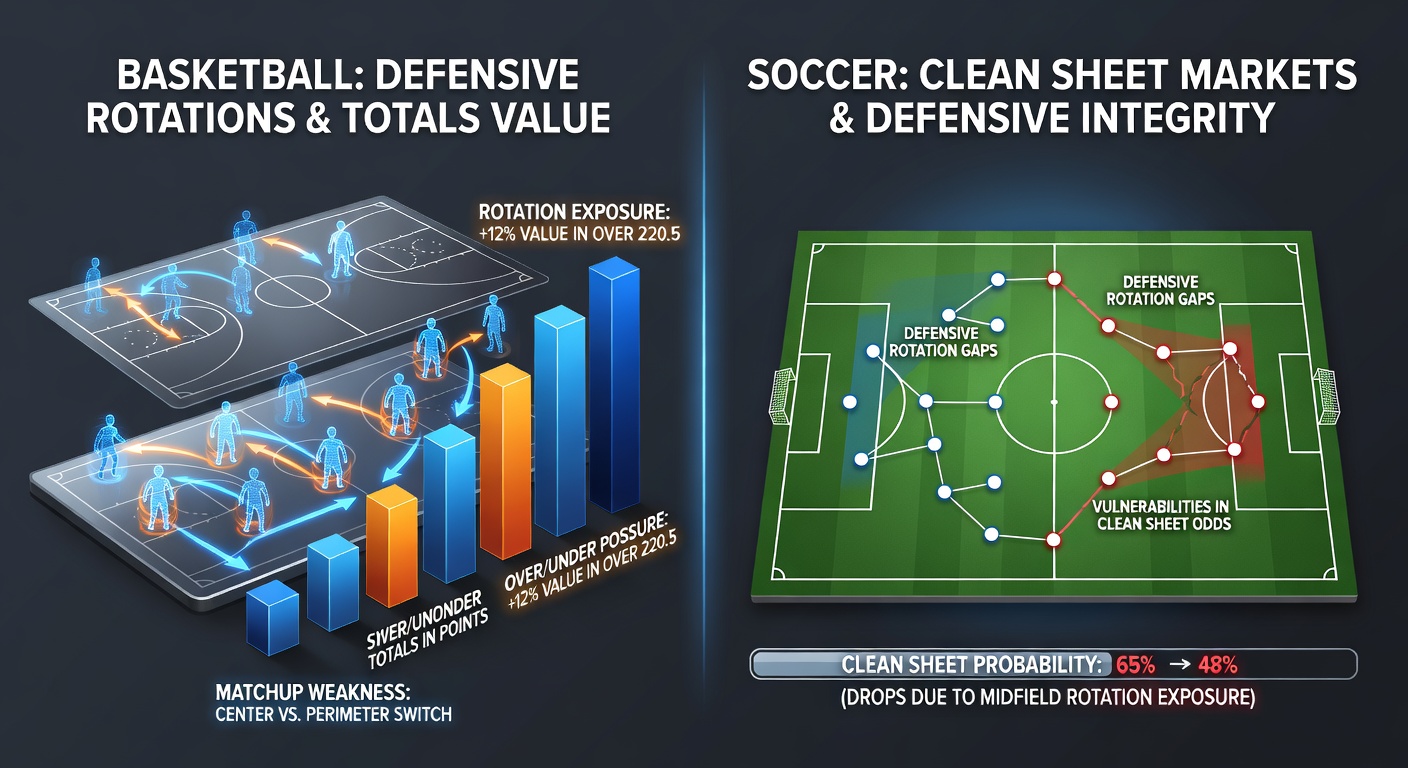
League-wide figures compiled through the 2025-2026 campaigns highlight that clean sheet markets undervalue teams that rotate their holding midfielder into deeper zones during the final 15 minutes. This adjustment compresses space in front of the penalty area and limits shots from distance, a factor that accounts for nearly one in five shutouts recorded in domestic cup competitions. Markets that price clean sheet odds using season-long averages rather than recent tactical trends leave room for value when these rotations become predictable through video analysis or lineup release timing.
Cross-Sport Applications in May 2026 Scheduling
As leagues approach the May 2026 postseason windows, both basketball and soccer schedules feature compressed fixtures that increase the frequency of defensive rotations due to player management needs. Conference tournament data from the prior three seasons shows that teams resting starters in early rounds alter their defensive schemes more aggressively, producing totals outcomes that diverge from regular-season models by an average of 6.8 points. In parallel, domestic soccer leagues entering final matchweeks see managers protecting clean sheet bonuses for key defenders, which elevates the frequency of low-event games in the closing stages.
Research groups at institutions such as the NCAA research division have documented how rotation frequency spikes in May tournament settings, while UEFA technical reports track similar patterns in European knockout stages. These documented shifts allow market participants to cross-reference basketball totals models with soccer clean sheet indicators when both sports operate under similar scheduling pressures.
Practical Tracking Methods
Performance analysts use optical tracking systems and lineup metadata to flag rotation triggers before they fully develop on the court or pitch. In basketball, a switch from man-to-man to zone coverage after three consecutive made threes often precedes a measurable slowdown in scoring tempo, and similar signals appear in soccer when teams drop into a low block after securing an early lead. Observers who integrate these indicators into totals and clean sheet evaluations report more consistent alignment between projected and actual outcomes across sample sizes exceeding 200 matches per season.
Betting exchanges and odds compilers have begun incorporating rotation probability into live models, yet pre-match markets continue to lag behind the most current tactical information released through official team channels. Those who study substitution logs from the opening 10 minutes of each contest find early confirmation of planned defensive changes that later influence both basketball point totals and soccer shutout results.
Conclusion
Defensive matchup rotations in basketball and soccer generate quantifiable effects on scoring totals and clean sheet outcomes that data providers and statistical services continue to refine. As May 2026 approaches, the increased density of high-stakes fixtures amplifies the frequency of these adjustments, offering structured opportunities for markets that update with lineup and tactical data rather than relying solely on historical averages. Continued monitoring of rotation patterns through established tracking platforms remains central to identifying value in these specific betting categories.