Travel Lag Patterns: Identifying Edges in Cross-Continent Tennis and Soccer Wagers Through Time Zone Adjustments
Morgan Griffin · Jul 10, 2026
Travel Lag Patterns: Identifying Edges in Cross-Continent Tennis and Soccer Wagers Through Time Zone Adjustments
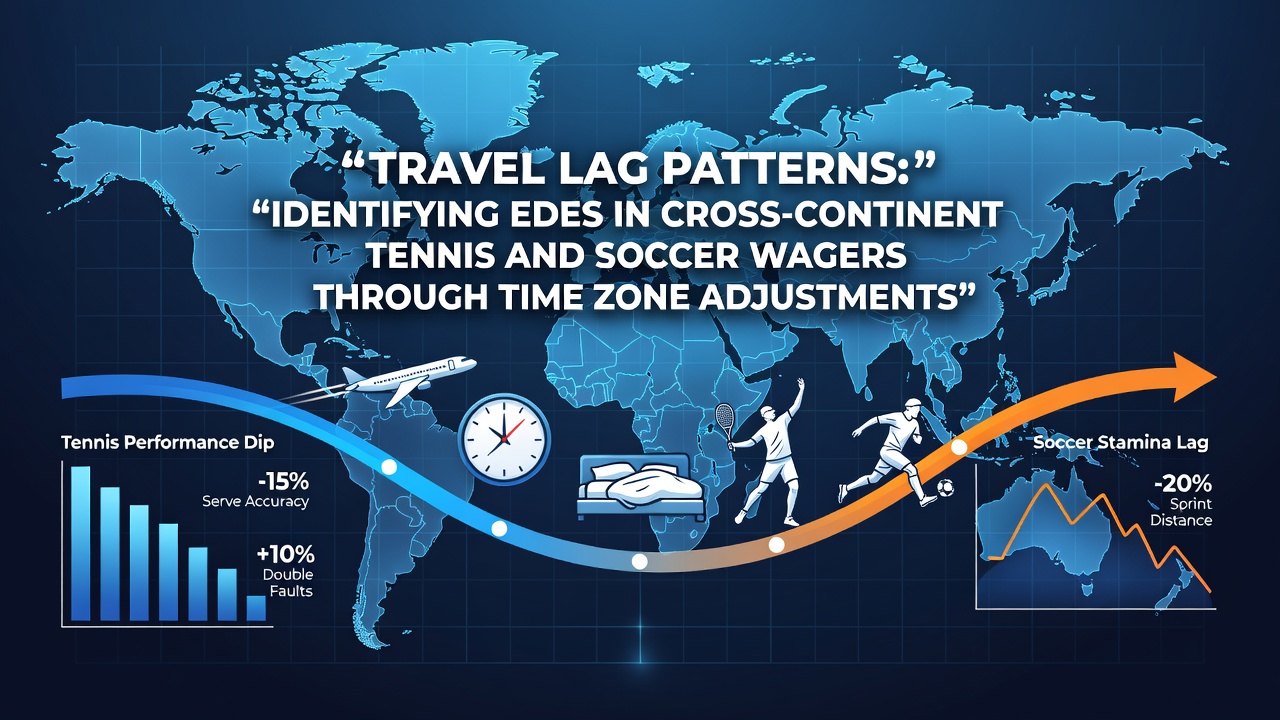
Travel across multiple time zones creates measurable disruptions in athlete performance that data analysts track closely in professional tennis and soccer, and those patterns open specific opportunities for wager adjustments when matches involve teams or players crossing continents. Circadian rhythm studies show that eastward travel tends to compress recovery windows more than westward journeys because the body clock struggles to advance rather than delay, while performance metrics in both sports reveal consistent dips in serve accuracy, sprint recovery, and decision speed during the first 48 to 72 hours after arrival.
How Time Zone Shifts Affect Match Outcomes
Researchers at institutions such as the University of Melbourne have documented that soccer teams traveling eastward across five or more zones post win percentages roughly 8 percent lower than their season averages in the opening fixture, and the effect compounds when the away side faces an opponent already acclimated to local conditions. Tennis players exhibit similar trends, with data from the Australian Open and US Open indicating that competitors arriving from Europe or Asia record lower first-serve percentages and higher unforced error counts in early-round matches scheduled within 36 hours of landing. Bettors who monitor flight itineraries and schedule buffers therefore identify value in underdog lines or adjusted totals when the travel differential favors the home side.
Tracking Performance Metrics Across Sports
Performance databases compiled by sports science groups reveal that soccer midfielders lose an average of 12 percent in high-intensity running distance during the initial 45 minutes after significant eastward travel, whereas tennis players show measurable declines in rally length tolerance and serve placement precision during the same window. Westward travel produces milder effects, with most athletes regaining near-baseline output within 48 hours because the body adapts more readily to delayed cycles. Observers note that these differences become particularly pronounced in July 2026 when the expanded FIFA Club World Cup schedule places European squads in multiple North American venues with tight turnaround times between group-stage fixtures.
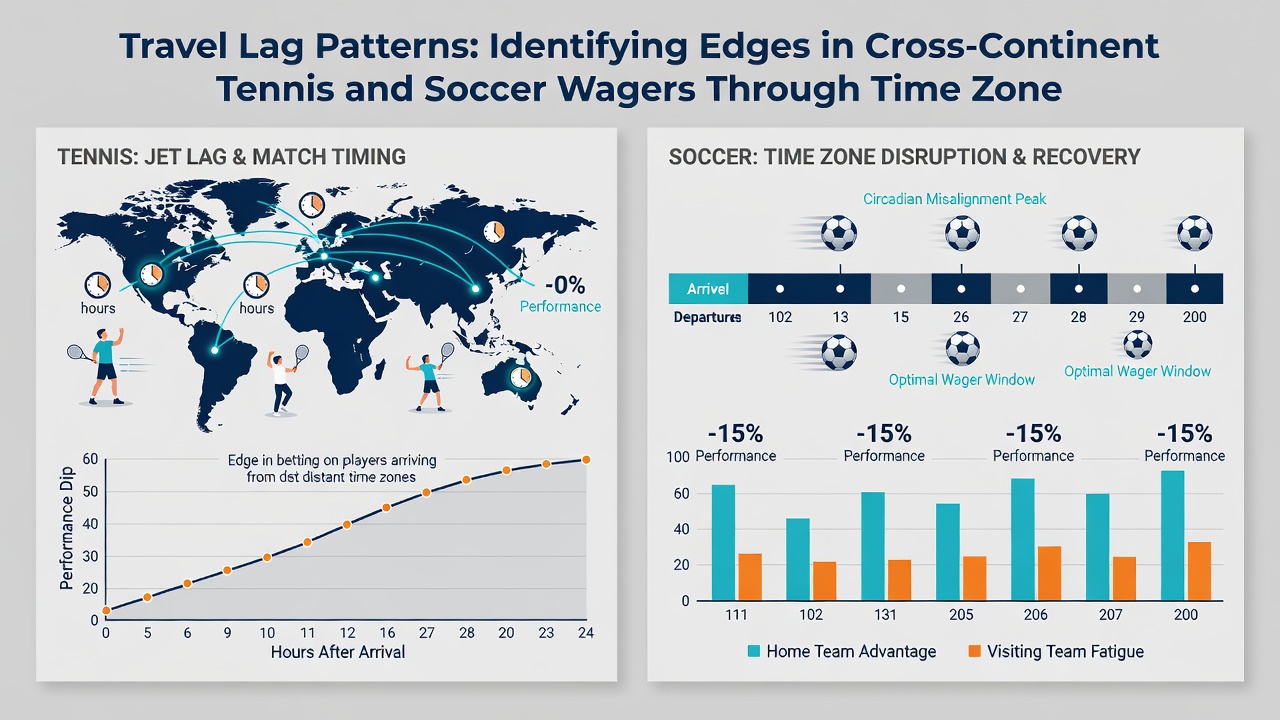
Time zone adjustment models incorporate sleep data, training load reports, and historical results to generate probability shifts that betting markets sometimes price slowly. For instance, a team flying from London to Los Angeles for a midweek soccer match faces a nine-hour shift that studies link to elevated fatigue markers, while a tennis player moving from Tokyo to New York encounters an eleven-hour change that correlates with reduced break-point conversion rates in the first two days on site. Those who integrate publicly available flight logs with performance databases locate edges in live betting markets where early-match totals or set handicaps reflect incomplete accounting for recovery deficits.
Applying Data to Wager Construction
Analysts who build time-zone overlays into their models examine variables such as direction of travel, number of zones crossed, arrival-to-match interval, and prior acclimatization history. In tennis, a player who lands in Melbourne after departing from Madrid typically shows elevated double-fault rates in the first two matches, prompting market adjustments on over/under game totals once the data becomes public. Soccer totals respond similarly when a traveling side plays its first fixture after an eight-hour eastward shift, with under totals gaining probability weight because goal creation slows during the initial adaptation period. Figures from the Canadian Sport Institute indicate that teams employing structured light-exposure protocols and scheduled naps reduce the performance gap, yet many clubs still arrive with minimal buffer time due to fixture congestion.
Historical match files from ATP and FIFA events allow construction of baseline adjustments that remain stable across seasons, and those adjustments prove most reliable when the travel differential exceeds four time zones. Bettors therefore review schedules for July 2026 tournaments where multiple squads must cross the Atlantic or Pacific within short windows, then compare implied probabilities against models that factor recovery curves. The approach yields edges in both pre-match and in-play markets because pricing often lags behind the documented physiological effects.
Regional Variations and Scheduling Factors
European teams traveling to South American venues encounter combined effects of altitude and time-zone change that compound fatigue beyond what either factor produces alone, while North American squads heading to Asian tournaments face similar layered stressors. Data sets compiled by the Australian Institute of Sport demonstrate that recovery timelines stretch further when matches occur during local evening hours that conflict with the traveler's internal clock, creating additional value in totals markets. Observers tracking these patterns also note that home teams benefit from the absence of disruption, which widens the performance spread when the visitor arrives with limited acclimatization time.
Conclusion
Time-zone adjustment frameworks supply a repeatable method for refining probability estimates in cross-continent tennis and soccer wagers, and the underlying performance data continues to expand as more organizations publish recovery metrics. Those who combine flight records, historical results, and circadian research locate consistent discrepancies between market lines and expected outcomes, particularly during congested summer schedules that include events in July 2026. The patterns remain measurable rather than speculative, allowing systematic integration into betting models without reliance on subjective judgment.